Source Pu Elastomer Rod for Mining, Cement, and Construction
Compare 30 pu elastomer rod options from verified Chinese suppliers. Buyers can evaluate hardness, dimensions, and customization capabilities for loader, coal yard, and thermal power plant applications. These products feature working temperatures from -40 to 80 degrees Celsius and offer high abrasion resistance suitable for demanding industrial environments.
Key considerations
Products List









Comprehensive Sourcing Guide
PU Elastomer Rod Sourcing Guide
Procuring polyurethane elastomer rods requires a disciplined approach to material selection and supplier verification, as performance varies significantly across formulations. Buyers must distinguish between cast polyurethane (CPU) and thermoplastic polyurethane (TPU) variants, as the former typically offers superior abrasion resistance and tear strength for heavy-duty industrial applications. The observed market signals indicate a wide range of hardness options, from Shore A10 to Shore D75, allowing for precise tuning to specific mechanical loads and environmental conditions. Understanding these material distinctions is the first step in defining accurate technical requirements that align with operational demands.
Commercial listings often present conflicting data regarding dimensions, densities, and certifications, necessitating rigorous due diligence before placing orders. The observed product count and price ranges suggest a fragmented supplier base with varying quality standards, making it essential to verify physical attributes rather than relying solely on catalog descriptions. Buyers should prioritize suppliers who provide transparent documentation on raw material origins, such as virgin versus recycled content, and clarify whether the rods are manufactured via casting or injection molding processes. This foundational verification ensures that the selected components will meet the intended service life and safety standards in demanding environments.
Product Scope and Observed Listing Signals
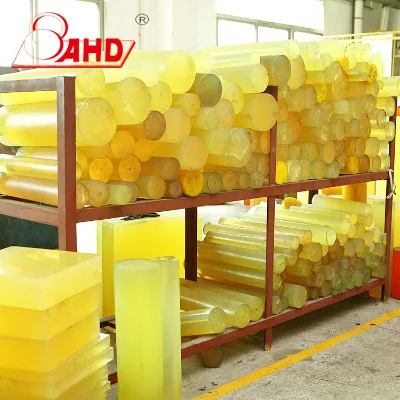
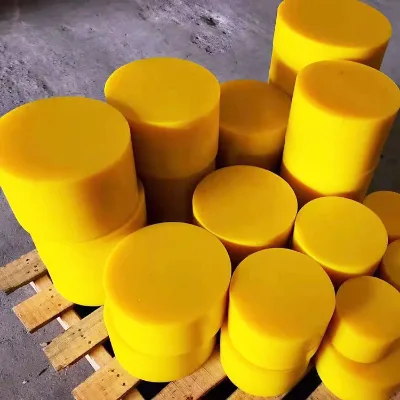
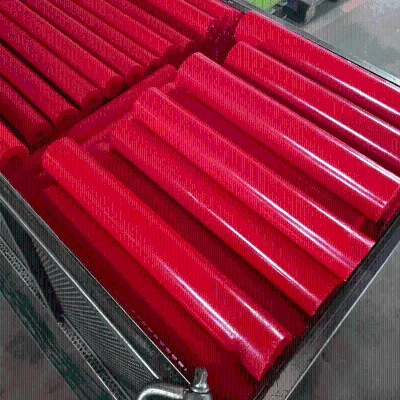
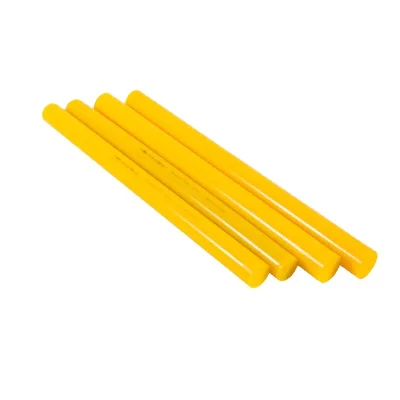
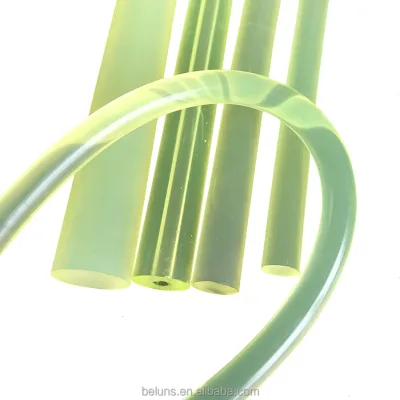
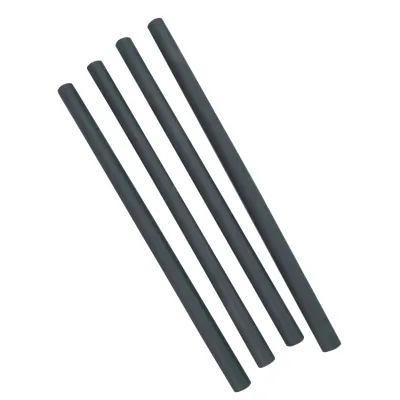
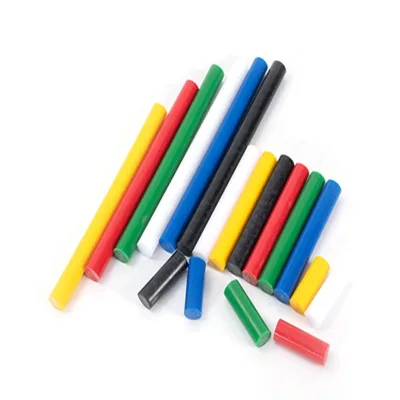
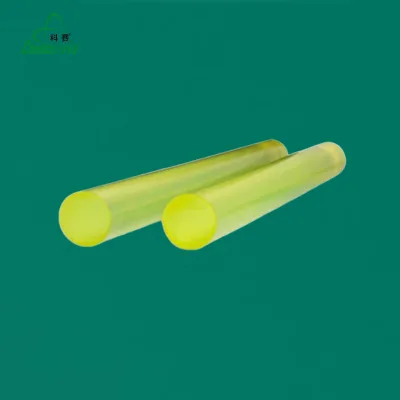
The current market for polyurethane elastomer rods features a diverse array of product types, including solid rods, hollow rods, and boards, with conventional diameters ranging from 10mm to 350mm. Listings frequently highlight customization capabilities, allowing buyers to specify non-standard sizes, lengths, and thicknesses up to 100mm, which is critical for specialized machinery components. Observed models such as HS-PU-L and HS-PU-L33 indicate that manufacturers offer specific product lines tailored to different performance profiles, though buyers must confirm that the specific model matches their required mechanical properties. The availability of various colors, such as transparent yellow, green, red, and black, often serves as a visual identifier for different hardness levels or material grades.
Commercial signals also reveal significant variability in packaging and origin, with products shipping from regions like Zibo and Guangdong in China using methods ranging from wooden pallets to containerized bubble-wrapped cartons. The observed minimum order quantities (MOQ) span from 1 to 500 units, reflecting a mix of sample-friendly suppliers and high-volume manufacturers. Buyers should note that while some listings claim standard spot sizes like 1000x1000mm boards, the core focus remains on custom-cut rods and profiles. This flexibility is a key advantage for procurement teams managing diverse inventory needs, but it requires clear communication of exact specifications to avoid fulfillment errors.
Technical Specifications to Verify
Hardness is a primary technical parameter, with observed ranges spanning Shore A10 to Shore D80 or even D95, depending on the specific product line. Buyers must verify the exact durometer rating for their application, as this directly influences the rod’s flexibility, load-bearing capacity, and resistance to deformation. Additionally, elongation at break is a critical indicator of durability, with typical values ranging from 300% to 800%, ensuring the material can withstand significant stress without fracturing. Density is another vital metric, often cited between 1.05 and 1.25 g/cm³ for polyether-based variants, which affects the weight and cost-per-unit-volume of the final component.
Thermal and chemical resistance properties must also be rigorously checked, as working temperatures typically range from -40°C to 80°C, limiting suitability for extreme environments. Water absorption rates are exceptionally low, often below 0.01%, which enhances dimensional stability in humid or wet conditions. Compression set values, such as ≤3% after 22 hours at 70°C, indicate the material’s ability to recover its original shape after prolonged compression, a key factor for sealing and cushioning applications. Buyers should request specific test data for abrasion resistance, which is often claimed to be three to five times better than ordinary rubber, to validate performance claims against industry benchmarks.
Compliance and Safety Documentation
While polyurethane elastomers are widely used in industrial settings, buyers must ensure that suppliers provide appropriate safety data sheets (SDS) and material compliance certificates. Although specific certifications like ISO or REACH are not explicitly confirmed in all listings, reputable manufacturers should be able to demonstrate adherence to international standards such as AISI, ASTM, BS, DIN, GB, and JIS. These standards govern material testing methods and quality control processes, ensuring that the rods meet consistent performance criteria across different batches. Procurement teams should verify that the supplier has a documented quality management system in place to maintain these standards throughout production.
Food contact or medical-grade compliance is not indicated in the observed product data, so buyers using these rods in sensitive industries must explicitly confirm regulatory status. For general industrial applications in sectors like mining, cement, and construction machinery, the focus should be on mechanical performance and durability rather than biological safety. However, if the rods are used in environments with potential chemical exposure, buyers should request compatibility charts to ensure the polyurethane formulation will not degrade when in contact with oils, greases, or cleaning agents. Clear documentation of these compliance aspects mitigates legal and operational risks associated with material failure.
Cost Drivers and Commercial Terms
The price range of $0.8 to $4.97 USD observed in listings reflects significant variability based on material grade, hardness, and order volume. Higher hardness levels, such as Shore D variants, and specialized formulations like polyether-based elastomers typically command higher prices due to increased raw material costs and processing complexity. Buyers should analyze the total cost of ownership, considering that superior abrasion resistance and lower compression set can reduce replacement frequency and maintenance downtime, thereby offsetting higher initial unit costs. Customization fees, including CNC cutting, punching, and slotting, also impact the final price, so buyers should consolidate orders to maximize efficiency.
Commercial terms such as MOQ, lead times, and packaging requirements vary widely among suppliers, necessitating clear negotiation on these fronts. The observed MOQ range of 1 to 500 units allows for flexibility, but larger orders often yield better pricing and more consistent quality control. Packaging methods, from export wooden pallets to bubble-wrapped cartons, affect shipping costs and product protection, so buyers should specify requirements to prevent damage during transit. Additionally, payment terms and warranty policies should be clearly defined to protect against defects, ensuring that the supplier stands behind the mechanical performance and dimensional accuracy of the delivered rods.
Supplier Qualification and Quality Control
Evaluating supplier capabilities is crucial, as the observed product data indicates a mix of casting and injection molding processes, each with distinct quality implications. Cast polyurethane (CPU) rods, often produced via high-temperature casting molds, generally offer better mechanical properties and uniformity compared to injection-molded variants. Buyers should verify the supplier’s manufacturing capacity, with some claiming supply abilities of up to 3000 tons per month, to ensure they can meet large-scale demand without compromising quality. Additionally, the use of 100% virgin materials is a key quality indicator, as recycled content can introduce inconsistencies in density, hardness, and tensile strength.
Quality control procedures should include rigorous inspection of dimensions, surface finish, and mechanical properties before shipment. Buyers should request sample testing to verify elongation at break, tear strength, and hardness consistency across batches. The observed processing services, such as CNC cutting and engraving, require precise tooling and skilled operators to maintain tight tolerances, so suppliers should demonstrate their capability to produce custom shapes with minimal deviation. Establishing a clear quality agreement that defines acceptable tolerances and rejection criteria helps prevent disputes and ensures that the delivered products meet the specific engineering requirements of the application.
Long-Term Procurement Checks
Sustaining a reliable supply chain for polyurethane elastomer rods requires ongoing monitoring of supplier performance and material consistency. Buyers should conduct periodic audits of the supplier’s quality management systems and review their track record for on-time delivery and defect rates. Since polyurethane is sensitive to UV exposure and extreme temperatures, long-term storage conditions must be controlled to prevent degradation before installation. Regular re-evaluation of material specifications is also necessary, as advancements in polymer chemistry may offer improved alternatives with better thermal stability or chemical resistance over time.
Building a strong relationship with qualified suppliers facilitates better collaboration on custom projects and faster resolution of technical issues. Buyers should maintain a database of tested and approved materials, including specific model numbers like HS-PU-L, to streamline future procurement cycles. Additionally, staying informed about industry standards and regulatory changes ensures that the selected elastomers remain compliant with evolving safety and environmental requirements. By prioritizing transparency, technical verification, and continuous improvement, procurement teams can secure a stable supply of high-performance polyurethane rods that support operational efficiency and product reliability.
FAQs
What is the hardness range for this polyurethane rod?
The hardness ranges from Shore A10 to Shore D75, with some variants reaching up to Shore D80 or D95. This wide range allows selection for specific applications requiring different levels of rigidity or flexibility in industrial machinery.
Can the rod dimensions be customized to non-standard sizes?
Yes, conventional diameters and lengths are customizable to meet specific project needs. The product offers various sizes including 10mm to 350mm diameters and lengths like 300mm, 500mm, or 1000mm, which can be cut to any required dimension.
How does the abrasion resistance compare to ordinary rubber?
The abrasion resistance is three to five times better than ordinary rubber. This superior durability ensures longer service life in demanding environments such as coal yards, mining machines, and cement plants where wear is a significant concern.
What is the maximum working temperature for the elastomer rod?
The working temperature range extends from negative 40 degrees Celsius up to 80 degrees Celsius. This thermal stability allows the material to perform reliably in diverse industrial settings without degrading under standard operating conditions.
Which processing methods are available for customizing the product?
Available processing methods include CNC cutting, punching, slotting, engraving, and high-temperature casting molding. These techniques enable precise fabrication of solid or hollow rods into complex shapes tailored to specific machinery requirements.
What is the water absorption rate of the polyurethane material?
The water absorption rate is less than 0.01 percent, indicating excellent resistance to moisture. This low absorption ensures dimensional stability and prevents degradation when the product is exposed to humid environments or wet industrial conditions.
Can the product be supplied with specific certifications like ASTM or DIN?
Yes, the product complies with multiple international standards including AISI, ASTM, BS, DIN, GB, and JIS. These certifications ensure the material meets rigorous quality and safety requirements for various global industrial applications and regulatory frameworks.